Noah Fly
The Earthquake BirdNoah Fly is one of Lucy Fly’s seven older brothers and, in her account, the nastiest of them. His death after an attack on Lucy beneath an apple tree is both a concrete consequence of his cruelty and a defining source of uncertainty in her childhood: she caused the fall that killed him, but had meant only to knock him down. The episode ends not with an explanation that settles responsibility, but with Lucy’s withdrawal and years of silence.
Identity and Family
Noah is part of a family in which Lucy occupies a conspicuously neglected position. The seven brothers hardly speak to her, and Miriam Fly discourages them from giving their sister attention because she believes it would diminish them. She idealizes her sons as angels, while Lucy remembers their practical meanness: they throw water bombs at neighborhood children and make a mess of the bathroom rather than take the trouble to find the toilet paper. Noah is identified as the worst of the brothers, a judgment that the attack on Lucy makes literal.
Even after Noah dies, the family’s language seems unable to register his absence. Miriam continues to refer to having seven sons, though only six remain. For Lucy, that insistence makes it difficult to regard his death as any kind of achievement. The phrasing reveals how little recognition or comfort she finds at home: the loss is named through the mother’s continued idealization of her sons, while Lucy’s own experience of Noah’s violence remains at the center of her memory.
The Attack Beneath the Apple Tree
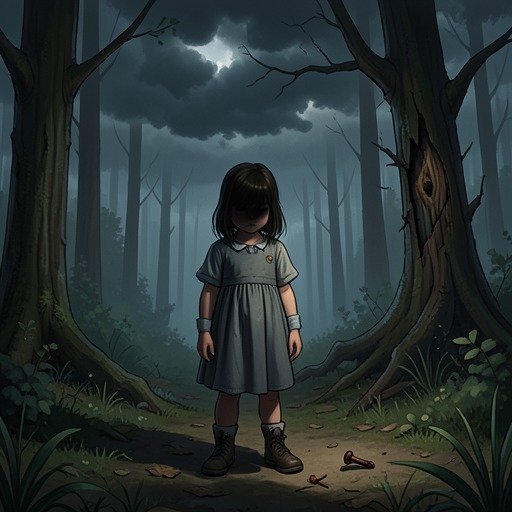
The fatal encounter takes place during the summer holidays, when Lucy is seven or eight. She is in the large cooking apple tree in the garden, a familiar place for climbing and watching from a position where she can be fairly sure no one is watching her. On this cloudless day she is reading Pollyanna, a book she dislikes, and shifting among the branches as she tries to shake loose apples. Noah and his brothers return from a Boy Scout fishing trip and spot her above them.
At Noah’s command, the brothers surround the tree and throw stones to bring Lucy down. She understands that climbing down would leave her at their mercy; staying aloft also puts her in danger. When she sees a particularly heavy, angular stone on the grass, Noah reaches for it. Lucy watches him lift it and sees the malice in his pale blue eyes. As Noah raises his arm to throw, she pushes down on the branch and launches herself from the tree, landing on him.
The fall turns the makeshift hazards of Lucy’s play into the instrument of Noah’s injury. A long plank she had placed in the grass has a rusty nail protruding from it. Noah lands on the nail between his shoulder blades, with the plank still attached to his back. He sits up, briefly speechless, then falls again and drops the stone. His eyes remain open, fixed on Lucy. He dies in hospital that night.
Death and Its Consequences
The scene presents Noah’s death as an unintended but direct consequence of Lucy’s action. She had often jumped from the tree, sometimes after placing objects such as a pitchfork, garden spades, or sharp planks in the grass to make the landing more challenging. On this occasion she means to squash Noah, not puncture him. The distinction does not undo what happened; it preserves the gap between her immediate intention and the fatal result.
The account acknowledges the devastation of Noah’s parents but withholds its details. Afterward, Lucy stops bothering anyone in the family and keeps to herself. She also gives up sitting in the tree. George Fly cuts down the cooking apple tree, despite the town council’s wishes, hacks it into pieces, and burns it. Lucy does not watch him do so and never learns whether the smoke brings tears to his eyes. The destroyed tree marks the end of the place from which she had once observed the world while keeping herself beyond its attention.
Narrative Role and Aftermath
Noah’s death is a turning point in Lucy’s childhood and in the way she remembers her own responsibility. Her siblings’ assault makes her fear for her life; her response saves her from the immediate threat but kills Noah. Neither the family’s language about its seven sons nor the brief description of the parents’ grief resolves that contradiction. The narration instead stays close to the physical sequence—the raised stone, the leap, the nail, the fall—and leaves Lucy’s burden visible in what follows.
Lucy does not speak for the next three years. The last person she talks to before that silence is a nurse who takes her by the hand along a hospital corridor and asks whether she understands that Noah’s death is not her fault. Lucy answers yes, no, and yes, because she does not understand the question and does not know which answer the nurse wants. The exchange does not establish a settled judgment about guilt; it shows a child unable to make sense of the reassurance offered to her. Noah’s brief life in the narrative thus persists through an absence: the brother who barely spoke to Lucy becomes inseparable from the event after which she stops speaking herself.